Rheumatoid Arthritis
- Overview
- Causes
- Symptoms
- Risk Factors
- Complications
- Treatment
- Self Care
- Prevention
- References
- Articles
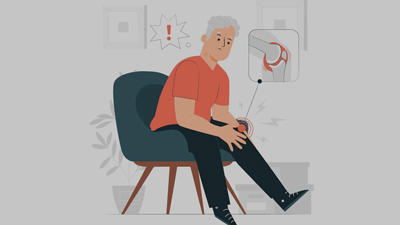
Rheumatoid arthritis is a disease in which there is inflammation/swelling in the joints, mainly of hands, wrist, and knees. It is an autoimmune disease in which the body’s immune system mistakenly attacks healthy cells. Hence, it is both an autoimmune and inflammatory disease. Its chief effect is pain, swelling, and stiffness in the joints. With time, it can also lead to tissue damage, causing chronic pain, deformity, and lack of balance. Although rheumatoid arthritis can affect anyone, women are more likely to get the disease than men. The symptoms generally begin to show in middle age and are common among the elderly.
What Is The Cause Behind Rheumatoid arthritis?
A healthy person’s immune system attacks invaders, such as harmful viruses and bacterias. However, in those suffering from rheumatoid arthritis, the immune system attacks the healthy cells, in this case -- synovium.
Synovium is a tissue lining wrapped around a joint. It produces a fluid that helps the joints to move freely. When this gets inflamed, it gets thicker and tender, and it gets painful to move the joint. However, the exact cause, that why in some people such an immune response is triggered against healthy cells, is currently not known.
Signs And Symptoms Of rheumatoid arthritis
According to the US Centers For Disease Control And Prevention (CDC), at times the symptoms of rheumatoid arthritis improve, which is called remission, and sometimes, it gets worse, which is known as a flare. Here are some of the signs and symptoms of the disease:
- The primary sign is a pain in one or more joints.
- Swelling and stiffness in one or more joints.
- There can be tenderness in joint(s).
- The same joints on both sides of the body (such as both hands or legs) are affected.
- Weight loss
- You might get a fever
- You feel tired
- Weakness
Are There Any Risk Factors?
There are certain risk factors that can increase your risk of getting rheumatoid arthritis:
- Age: Although rheumatoid arthritis can affect people of any age, it generally develops in a person who is in the middle age. The disease is common among the elderly.
- Gender: Women are two to three times more likely to suffer from it than men.
- Genetics: Those born with a particular gene are more likely to develop rheumatoid arthritis than others. That gene is HLA (human leukocyte antigen) class II genotypes, which can also make the arthritis worse, as per the US CDC. Also, people born with this gene are more likely to suffer from this disease when they are exposed to certain factors, such as smoking, or if they are obese.
- Smoking: Several studies show that smoking cigarettes can increase your risk of developing rheumatoid arthritis. Your risk is more if you are genetically predisposed. Also, smoking may also increase the severity of the disease.
- Obesity: The risk of developing rheumatoid arthritis increases with weight. Hence, an obese person is more likely to suffer from it than the one whose weight is normal.
- Live Births: Studies have shown that women who haven’t given birth are at a greater risk of suffering from the disease.
- Other: Exposure to certain things in early life can increase the risk of developing rheumatoid arthritis during adulthood. For example, studies have shown that children whose mothers smoked are at a greater risk of this disease. Similarly, children who come from low-income families are at risk of getting rheumatoid arthritis.
Although there are several risk factors that increase your risk of developing rheumatoid arthritis, there is one factor that decreases the risk. Women who breastfeed their infants are at a lower risk to this disease than others.
Complications Of Rheumatoid Arthritis
A serious health condition, rheumatoid arthritis has major physical health consequences that can impact your daily life. It causes pain, can cause disability, and can even lead to premature death. Here are some of the complications associated with rheumatoid arthritis:
- Osteoporosis: Both rheumatoid arthritis and the medication for it can increase your risk of getting osteoporosis, which is a serious health condition, in which your bones weaken, and get prone to fracture(s).
- Infections: Both rheumatoid arthritis and the medication for it can weaken the body’s immune system, making it more prone to getting infections.
- Dryness In Eyes And Mouth: Sjogren's syndrome, which is a disorder in which the moisture in your eyes and mouth decreases, is more likely among patients of rheumatoid arthritis.
- Carpal tunnel syndrome: It is a condition in which there is pain, numbness or tingling in the hands and/or wrists. If rheumatoid arthritis causes inflammation in the wrists, it can compress the major nerves in the hands, leading to carpal tunnel syndrome.
- Heart Disease: Rheumatoid arthritis can increase your risk of developing chronic heart disease(s).
- Lung Disease: Rheumatoid arthritis has also been shown to increase your risk of getting lung disease(s).
What Is The Treatment For Rheumatoid Arthritis?
Rheumatoid arthritis can be treated by medication and self-care. As per the Arthritis Organisation, the goals of the treatment are to stop or lower inflammation, to relieve the symptoms, to prevent joint and organ damage, and to prevent lifelong complications.
Patients of rheumatoid arthritis disease-modifying antirheumatic drugs, or DMARDs, which slows down the disease and prevents joints deformity. Biological response modifiers are generally given as the second-line treatment. Then comes the self-care tips that go a long way in slowing down the disease, and decreasing its severity.
How To Manage Rheumatoid Arthritis?
This disease can affect various aspects of life, such as work, social life, and even the mundane day-to-day activities. Although there are medications for it, there are some easy self-care tips that you can follow to manage the disease.
- Get Active: You should exercise for at least 150 minutes per week. This is as easy as getting a 30 minutes walk every day. If you run short of time, you can make small adjustments like taking the stairs rather than the elevator, parking your car at a spot that requires you to walk more, or just standing up from your desk, and just stretching for some time. This not only helps with rheumatoid arthritis, it also protects you from other diseases, such as cardiovascular diseases, diabetes, and depression.
- Healthy Diet: Maintaining a healthy weight is crucial for those suffering from rheumatoid arthritis. Other than exercise, having a balanced diet, consisting of all food groups, is important for that.
- Quit Smoking: As you already know that smoking not only puts you at risk of getting rheumatoid arthritis, it also increases the severity of the disease. Hence, it is extremely crucial to quit smoking to manage the disease.
- Rest Enough: When rheumatoid arthritis flares up, it causes pain, swelling and stiffness in the joints. Hence, rest when that happens. Also, taking time off frequently helps prevent the joints, thus improving symptoms.
Prevention Tips
There is no way you can prevent rheumatoid arthritis, but you can decrease the risk of getting it. First and foremost, quit smoking, as it is one of the risk factors that both causes and increases the severity of the disease. If you are finding it difficult to quit, seek help. Another way to decrease your risk is by managing weight, as people who are overweight or obese are at a greater risk of getting the disease than those who are not. Hence, eat well, get enough exercise, and manage your stress level.
https://www.cdc.gov/arthritis/basics/rheumatoid-arthritis.html
https://www.arthritis.org/diseases/rheumatoid-arthritis
https://docs.google.com/document/d/1hx6rY_vPt_3MeGnK7Tzt0SOa8b6jo76ArBMHN3rKNvA/edit
https://www.versusarthritis.org/about-arthritis/conditions/rheumatoid-arthritis/
Related Articles
-
![Expert Suggests Plant-Based Diet Can Help You Keep Your Allergies At Bay]()
Expert Suggests Plant-Based Diet Can Help You Keep Your Allergies At Bay
Fruits and vegetables rich in omega-3 fatty acids, dietary fibre, zinc, and selenium are anti-inflammatory and suppress allergic inflammation.
-
![The Hidden Link: Experts Explain Impact Of Stress On Rheumatoid Arthritis]()
The Hidden Link: Experts Explain Impact Of Stress On Rheumatoid Arthritis
Stress triggers the body's inflammatory response, exacerbating symptoms of Rheumatoid Arthritis (RA).
-
![Experiencing Joint Or Muscle Pain Months After COVID-19? Study Reveals The Hidden Link]()
Experiencing Joint Or Muscle Pain Months After COVID-19? Study Reveals The Hidden Link
Cases of Inflammatory Rheumatic Diseases are being highly reported as a consequence of acute COVID infection.
-
![Arthritis: Here Are Its Various Types And Prevention]()
Arthritis: Here Are Its Various Types And Prevention
Arthritis is characterised by swelling and discomfort in one or more joints. Read to know about its types and prevention.
-
![Rheumatoid Arthritis Affects More Than Just Your Joints: Note The Unusual Symptoms Of The Condition]()
Rheumatoid Arthritis Affects More Than Just Your Joints: Note The Unusual Symptoms Of The Condition
While rheumatoid arthritis primarily causes joint inflammation, it can also affect other parts of the body. Here's how...
-
![Beware Of These Triggers That Can Worsen Joint Pain In Rheumatoid Arthritis]()
Beware Of These Triggers That Can Worsen Joint Pain In Rheumatoid Arthritis
Rheumatoid arthritis often manifests joint pain flare-ups that can be worsened by lifestyle factors.
-
![Recognising the Red Flags: 20 Signs You Have an Autoimmune Disease]()
Recognising the Red Flags: 20 Signs You Have an Autoimmune Disease
Examining patients for potential autoimmune diseases is fraught with difficulty because not one laboratory test establishes such a diagnosis.
-
![From Lyme Disease To Psoriasis: Expert Lists Diseases That Mimic Rheumatoid Arthritis]()
From Lyme Disease To Psoriasis: Expert Lists Diseases That Mimic Rheumatoid Arthritis
Rheumatoid arthritis is a chronic inflammatory disorder affecting joints. However, there are many health conditions that mimic its symptoms.
-
![Arthritis In Young Adults: Risk Factors And Symptoms]()
Arthritis In Young Adults: Risk Factors And Symptoms
Arthritis in young adults is a significant health concern that should not be overlooked. Early detection and management are essential.
-
![Rheumatoid Arthritis VS Osteoarthritis: Expert Explains The Difference Between The Two]()
Rheumatoid Arthritis VS Osteoarthritis: Expert Explains The Difference Between The Two
Rheumatoid arthritis is a chronic inflammatory autoimmune illness, whereas osteoarthritis is a degenerative joint disease caused by wear and tear.